
Ask any fleet manager what ruins a work truck’s morning, and a dead battery lands near the top of the list. The truck sat over the weekend. Somebody left a load running. Monday comes and the engine will not turn over. A low voltage disconnect exists to prevent exactly that. A small piece of hardware watches your battery and steps in before a slow drain becomes a no-start.
This guide covers what a low voltage disconnect does, what drains a work truck battery in the first place, and how to tell when your build needs one.
What is a low voltage disconnect?
A low voltage disconnect, or LVD, is a device that monitors your battery voltage and automatically shuts off the connected loads when that voltage drops too low, leaving enough charge to start the engine. When the battery recovers, the load can be brought back online.
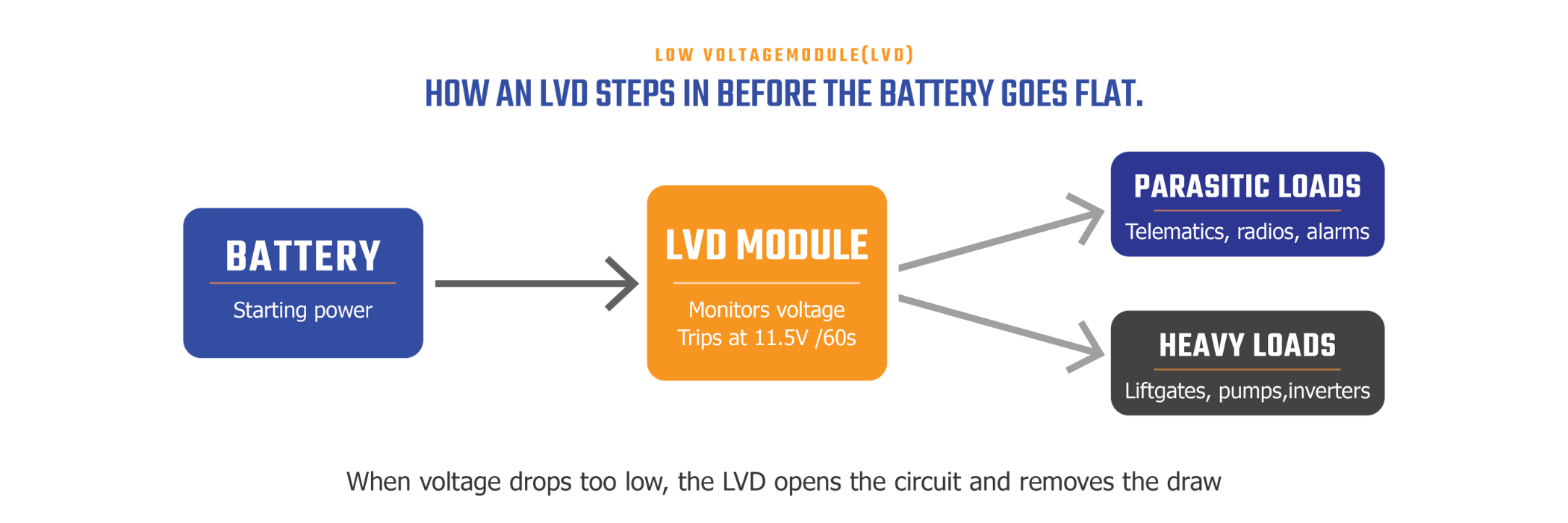
The logic is simple by design. The module sits between the battery and the loads it protects. It watches the voltage at the battery terminal, and when that voltage falls below a set point for a set length of time, it opens the circuit and removes the draw. InPower’s low voltage disconnect modules use a standard trip of 11.5 volts held for 60 seconds, though the time and voltage points can be programmed to match your application. That one decision, cutting the load before the battery goes flat, saves the jump start, the service call, and the tow.
What drains a work truck battery?
A work truck battery drains from loads that keep pulling power while the engine is off, and those loads fall into two groups: small parasitic draws that never fully sleep, and large auxiliary loads that run hard on the job.
Parasitic loads are the quiet ones. Telematics, radios, alarm systems, and control modules all sip current around the clock, and over a long weekend that sip adds up. The heavy hitters come next. Liftgates, pumps, inverters, and bucket equipment can pull a large battery bank down fast when the engine is not running to keep up. Battery trouble is common. AAA has reported that battery failure ranks among the most common reasons drivers call for roadside help (AAA roadside data). For a closer look at the high-current side of the problem, we broke it down in The LVD: Do Sweat the Big Stuff.
Why does draining a battery too far matter?
A deeply drained battery does more than strand you for a morning. Every deep discharge shortens the battery’s working life.
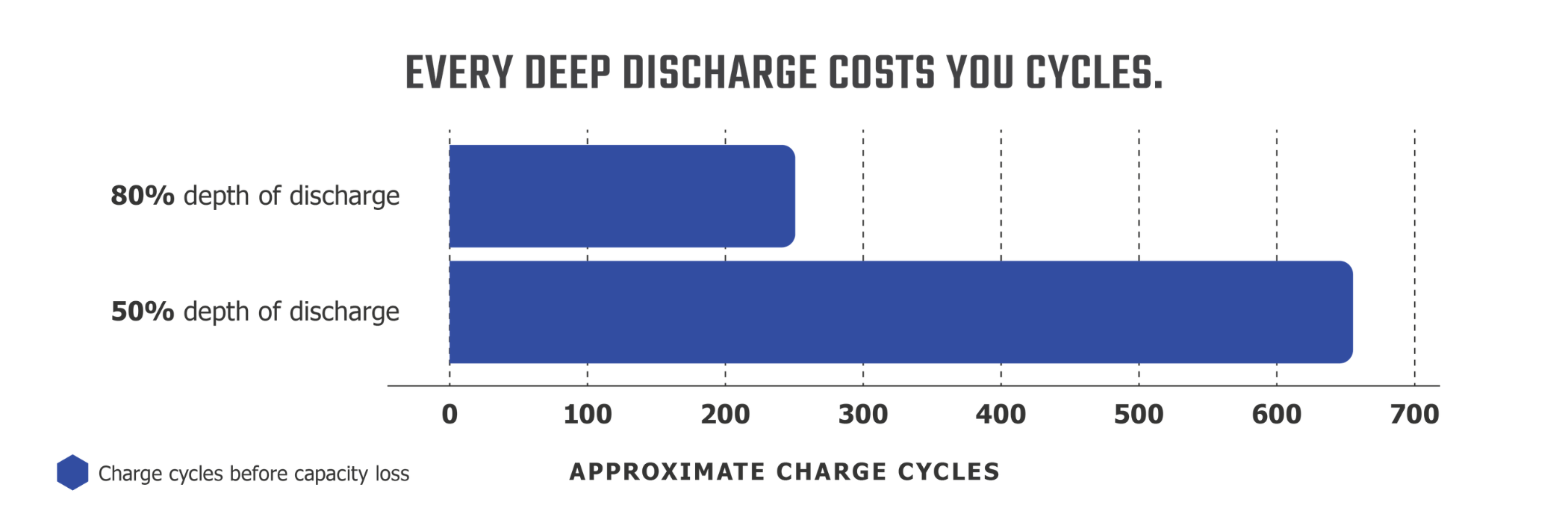
Lead-acid batteries do not like being run down. Discharge one to eighty percent of its capacity on a regular basis and you might get two to three hundred charge cycles out of it. Keep the discharge closer to half and that same battery can deliver five to eight hundred cycles (depth of discharge and battery life). The reason is chemical. Deep discharges build lead sulfate on the plates, and over time that buildup turns permanent and steals capacity. Protecting the battery from a deep drain protects the money you spent on it.
When do you need a low voltage disconnect?
You need a low voltage disconnect any time a vehicle sits with loads running while the engine is off, which describes most work trucks and upfit vehicles on the road.
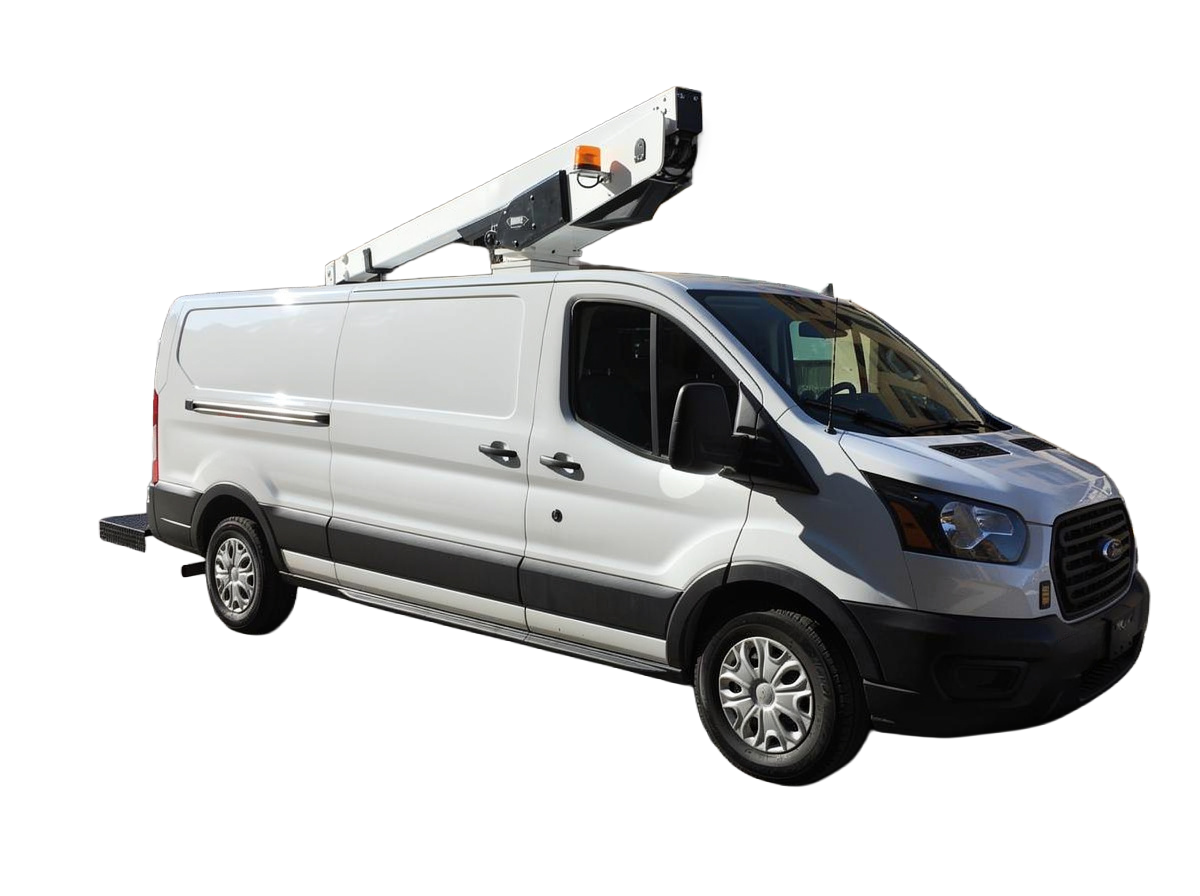
Utility, telecommunications, tree care, and municipal crews all park with equipment drawing power. Delivery vans sit overnight. Emergency vehicles hold radios and lighting ready for hours at a time. If a build runs anything off the battery while parked, an LVD earns its place. The right module depends on the load. A compact unit like the VCM12 handles small parasitic draws and long stretches of inactivity, while higher-current units like the LVD21 and LVD3 protect against heavy equipment loads. Because the whole line shares one design philosophy, matching a module to your build stays straightforward. We walk through the full product family in Keep it in the Family.
How does InPower build low voltage disconnects?
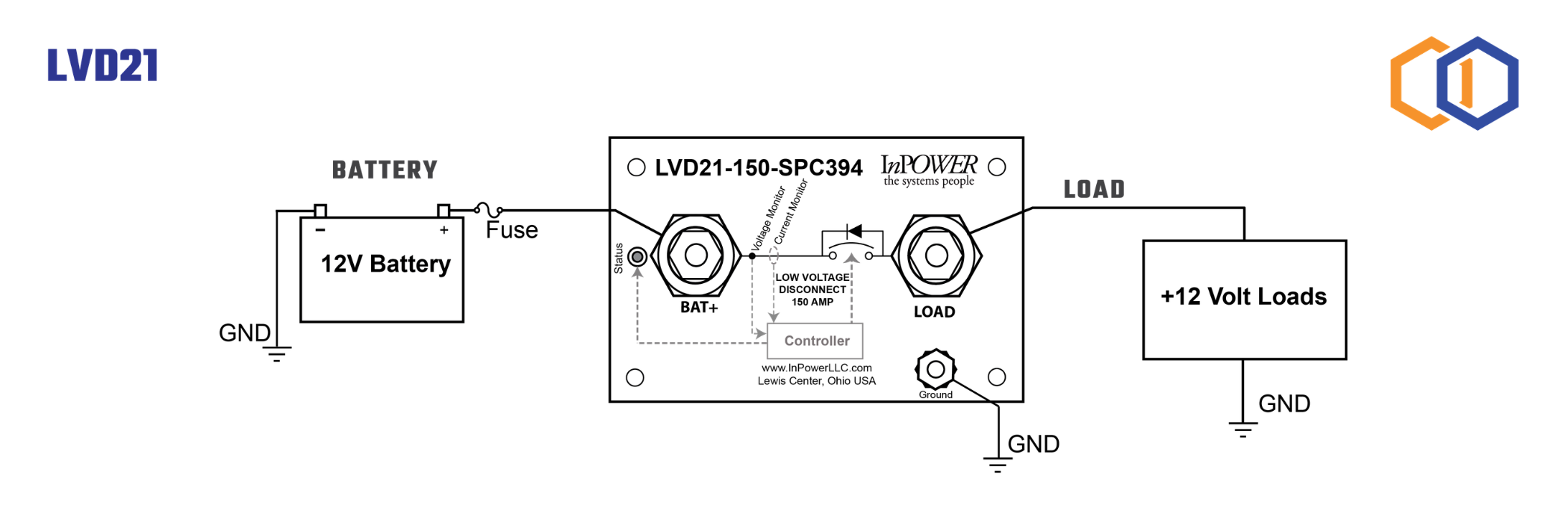
InPower builds a full range of low voltage disconnects, from compact modules for small loads to high-current units for heavy equipment, all designed and assembled in Lewis Center, Ohio.
Every unit is solid-state, programmable, and built to the reliability standard our products are known for in the field. You set the trip voltage and timing to fit the job instead of working around a fixed switch. And when you have a question about which one fits your build, you reach people who know the vehicles and the products, because they helped design them.
If dead batteries are costing your fleet time and money, let us help you match the right disconnect to your build. Call us at 740-548-0965 to talk it through.