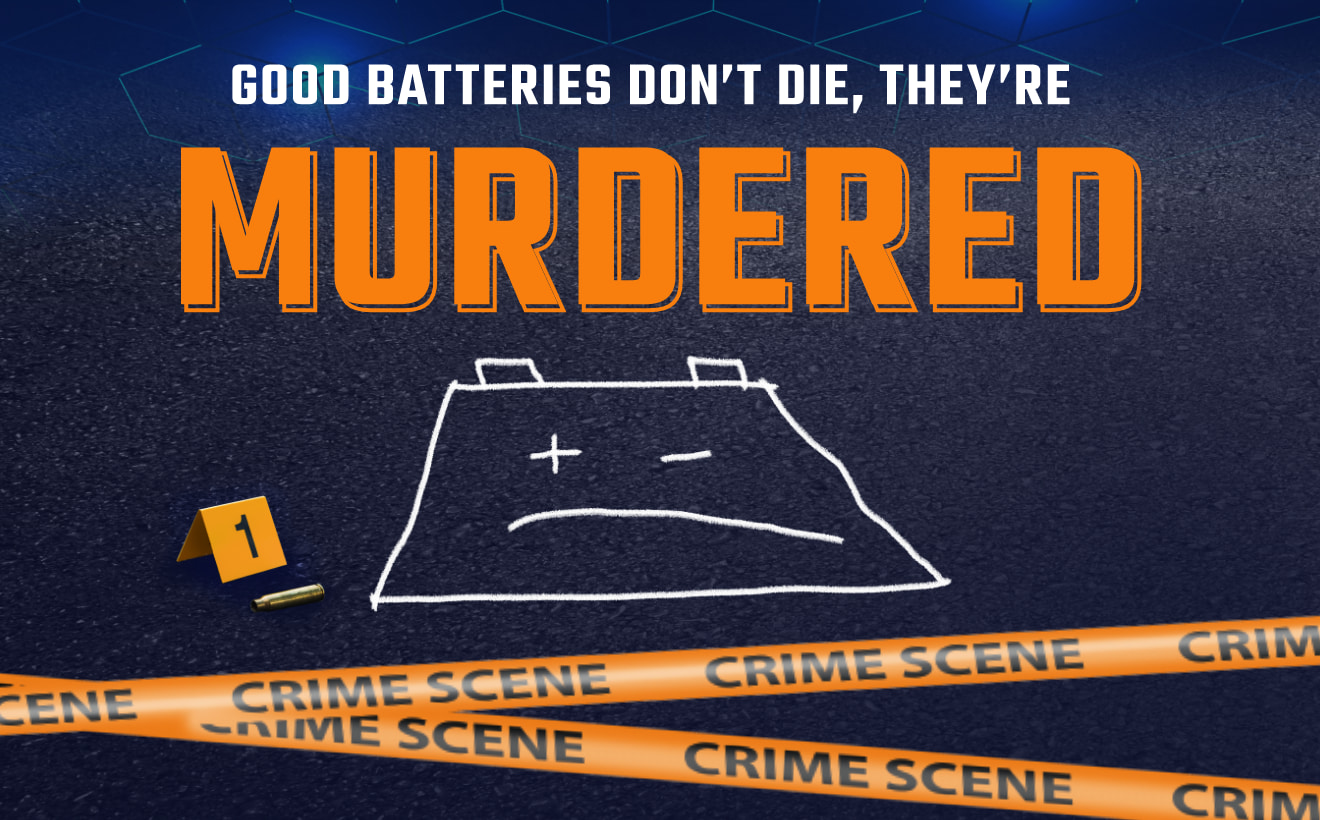
“Good batteries don’t die, they’re murdered”
InPower’s Family Tree of Switching Solutions covers a lot of ground: handling single small loads with our VCM products, multiplexed circuits with our VCMS family, heavier-duty loads with our HDVCM line, and high-current loads with our SSC products. Each product shares the same family DNA—durability and easy customization built right in, along with common functions available at almost any scale.
But there’s one additional capability that InPower brings—one that grows more critical
every year: Battery Protection.
Do you know how your battery chemistry actually works? Are you aware that how you manage your loads can significantly impact both your run-time now and the overall lifespan of your battery? This is true regardless of the battery chemistry—traditional lead-acid, deep-cycle batteries, or even modern lithium batteries. All can degrade from misuse, eventually leaving you stranded and forcing you to replace expensive batteries far more frequently.
Consistently drawing power from a battery when its voltage falls below safe discharge levels damages the battery’s chemistry and can quickly shorten its service life. However, by connecting your loads to a Low Voltage Disconnect (LVD) device and properly matching it to your battery’s safe working voltages, the LVD can safely turn off battery loads before the battery is over-discharged. This simple step can significantly extend your battery’s lifespan—and with truck batteries becoming increasingly expensive, this is an investment that pays off.
LVD devices also prioritize essential loads, ensuring non-critical loads are shut off. This helps preserve power for what you truly need—like starting your vehicle and avoiding being stranded.
Just like the rest of our Family Tree, our LVD products are available in multiple configurations to suit a variety of circuit sizes. Our VCM12 modules are compact and perfect for smaller loads up to 20 amps. Our LVD21 products can handle larger loads up to 200 amps. And our LVD3 series is designed for heavy-duty 300-amp circuits, offering the same protections and inrush safeguards as our SSC line of DC Contactors.
All our LVD products also offer the same level of customization you’ve come to expect from our DC switching solutions. We can set custom trip voltages to match your battery chemistry and balance that with your load requirements. For critical situations, we can even adjust timers, allowing loads to stay on for a few extra minutes—or even hours—if needed.
We can also integrate voltage sensing into our VCMS Multiplex systems.
Save your batteries before it’s too late. Protect them from excessive discharge with InPower’s family of Low Voltage Disconnect products. Save your vehicles from jumpstarts. Save your money by avoiding premature battery replacements.
Contact InPower today to learn more about our Low Voltage Disconnect solutions.